
 By gamerforge57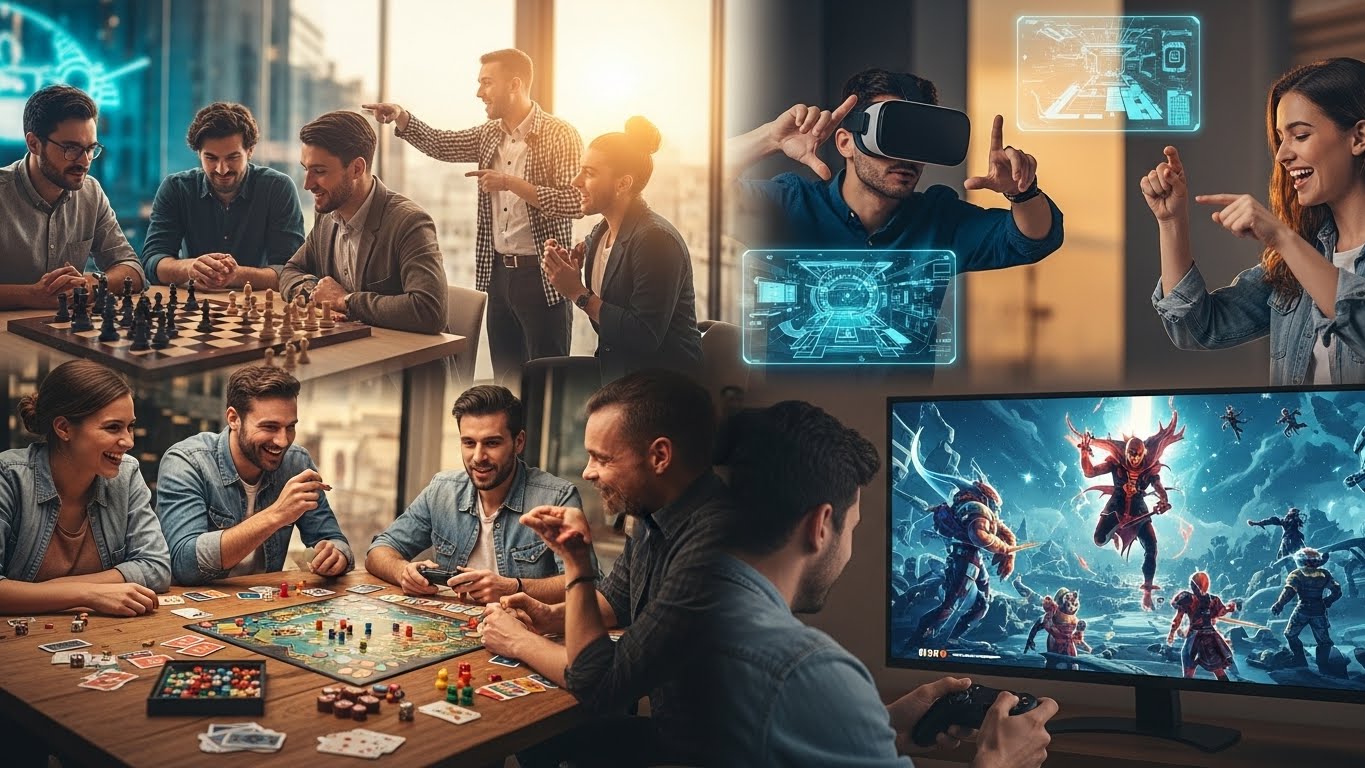
Introduction
Games have been an essential part of human culture since the dawn of civilization. They are more than just a pastime; they reflect our creativity, problem-solving abilities, social dynamics, and even cultural values. Over the years, games have evolved from simple physical activities and board games to highly immersive digital experiences. Today, the gaming industry spans multiple platforms, including consoles, computers, mobile devices, and even virtual and augmented reality environments. In this blog, we explore the history, technology, social impact, and future of games, highlighting their transformative role in entertainment and human interaction.
The Origins of Games
The history of games stretches back thousands of years. Archaeological discoveries reveal ancient board games, dice games, and competitive sports in early civilizations. Games like Senet in Egypt, Go in China, and Chess in India were not merely entertainment; they were tools for strategic thinking, education, and even spiritual reflection.
Senet, for example, was believed to connect players with the afterlife in Egyptian culture, while Go emphasized strategic depth, shaping generations of thinkers. Chess, with its complex strategies, became a symbol of intelligence and skill. These early games show that play has always been a reflection of human intellect, imagination, and social interaction.
The Evolution of Gaming Through the Ages
The 20th century marked a dramatic shift in how games were created and experienced. Traditional games like board games, card games, and sports continued to thrive, but the invention of computers and video game consoles transformed the entertainment landscape.
In the 1970s and 1980s, early digital games such as Pong, Space Invaders, and Pac-Man introduced interactive gameplay to a wider audience. These games, though simple by today’s standards, laid the foundation for the multi-billion-dollar gaming industry. The 1990s brought advanced consoles like the Super Nintendo and Sega Genesis, offering improved graphics, richer storylines, and more complex gameplay mechanics.
With the advent of the internet in the late 1990s and early 2000s, online multiplayer games emerged, connecting players globally. This era popularized genres such as massively multiplayer online role-playing games (MMORPGs), where players could collaborate, compete, and explore expansive digital worlds together.
Technology Behind Modern Games
Modern games are powered by advanced technology. High-performance graphics engines, realistic physics simulations, and artificial intelligence make gameplay immersive and engaging. Developers use 3D rendering and motion capture to create detailed characters, lifelike environments, and dynamic interactions that respond to player choices.
Artificial intelligence enhances games by providing intelligent non-player characters (NPCs), adaptive challenges, and personalized gameplay experiences. AI can adjust the difficulty based on a player’s skill level or create emergent narratives that respond uniquely to each individual.
Cloud computing has further revolutionized gaming by enabling cloud-based game streaming. Players can access high-quality games without the need for expensive hardware, while mobile gaming allows instant access to games on smartphones and tablets. This technological progress has made gaming more accessible and versatile than ever before.
Popular Game Genres
The gaming industry caters to diverse interests and preferences through a wide range of genres. Each genre offers a unique experience and challenges for players:
Action Games: These games focus on reflexes, timing, and coordination. Players engage in fast-paced combat, platforming challenges, or strategic attacks. First-person shooters and adventure-action hybrids dominate this category.
Role-Playing Games: RPGs allow players to inhabit characters in expansive worlds. They develop skills, make narrative choices, and interact with immersive environments. Examples include fantasy epics, sci-fi adventures, and historical simulations.
Strategy Games: Strategy games challenge players’ planning and decision-making skills. Real-time strategy (RTS) and turn-based games require careful resource management, tactical positioning, and long-term thinking.
Simulation Games: These games mimic real-life activities, from city building to life simulation and flight simulation. They appeal to players who enjoy planning, management, and realistic challenges.
Sports and Racing Games: These replicate competitive sports or racing experiences, emphasizing skill mastery, strategy, and teamwork. They often combine realism with engaging gameplay mechanics.
Casual Games: Casual games are easy to learn and play in short sessions. They include puzzle games, mobile app games, and social games, appealing to broad demographics and introducing non-traditional players to gaming.
Social and Cultural Impact of Games
Games are more than entertainment; they shape social interactions, cultural trends, and cognitive development. Multiplayer and online games create communities where players collaborate, compete, and communicate across borders. These social connections often extend beyond gameplay, fostering friendships and shared experiences.
Educationally, games can enhance problem-solving skills, memory, creativity, and strategic thinking. Many games challenge players with complex puzzles, resource management, and narrative choices that stimulate cognitive growth.
However, gaming’s cultural impact also has challenges. Concerns around excessive screen time, addiction, and exposure to toxic online behavior have prompted researchers and developers to advocate for responsible gaming practices. Tools such as playtime tracking, parental controls, and in-game moderation aim to balance entertainment with mental and social well-being.
The Rise of Competitive Gaming and Esports
Esports, or competitive gaming, has transformed gaming from a personal hobby into a professional pursuit. Players compete in organized tournaments, often for substantial prize money and global recognition. Popular esports titles include multiplayer online battle arenas, first-person shooters, and sports simulation games.
The growth of esports has created a new ecosystem encompassing players, coaches, commentators, organizers, and content creators. Streaming platforms allow fans to watch live matches, follow tournaments, and engage with their favorite teams. Universities and organizations even offer scholarships and training programs for aspiring esports professionals, highlighting gaming’s legitimacy as a competitive and career-oriented pursuit.
Virtual and Augmented Reality in Gaming
Virtual reality (VR) and augmented reality (AR) are reshaping the gaming experience. VR immerses players in fully digital environments, enabling them to interact with three-dimensional worlds. Whether exploring fantasy realms, battling enemies, or practicing real-world skills, VR games offer a level of immersion that traditional platforms cannot match.
AR overlays digital content onto the physical world, creating hybrid experiences. AR games encourage exploration, puzzle-solving, and interaction with the real environment. Both VR and AR demonstrate how technology continues to push the boundaries of gaming, making it increasingly interactive and immersive.
Economic Significance of Gaming
The gaming industry is a major global economic driver. It generates billions in revenue through game development, hardware sales, software distribution, in-game purchases, and esports. Digital distribution platforms have revolutionized how games are sold, enabling developers to reach audiences worldwide without relying on physical copies.
In-game purchases, downloadable content, and subscription models provide sustainable revenue streams while offering players ongoing engagement. Additionally, the industry creates jobs in development, design, marketing, customer support, and esports management. The economic impact extends beyond gaming itself, fostering growth in related fields such as streaming, merchandising, and technology development.
Future Trends in Gaming
The future of gaming promises innovation and expansion across multiple dimensions:
Cloud Gaming: Streaming games from powerful servers will eliminate the need for high-end hardware, making gaming more accessible globally.
Artificial Intelligence: AI will enhance personalization, adapt challenges dynamically, and create smarter game environments.
Cross-Platform Play: Allowing players to compete and collaborate across consoles, PCs, and mobile devices will strengthen communities and engagement.
Sustainable and Ethical Practices: Developers are increasingly mindful of environmental impact, inclusivity, and responsible design, creating games that align with broader social goals.
Gamification Beyond Entertainment: Gaming principles are being applied to education, training, and professional development, using engagement mechanics to teach skills and motivate participation.
Conclusion
Games are a powerful reflection of human creativity, intelligence, and social interaction. They have evolved from ancient board games to complex digital worlds, immersive virtual experiences, and competitive esports arenas. Beyond entertainment, games foster learning, critical thinking, collaboration, and cultural connection.
As technology continues to advance, the gaming landscape will become more immersive, inclusive, and interconnected. Virtual and augmented reality, cloud gaming, and artificial intelligence will redefine how players experience games, while esports and competitive platforms will continue to elevate gaming as a professional pursuit.
The world of games is dynamic, ever-changing, and deeply integrated into modern culture. From fostering personal growth to shaping social communities and economic systems, games have proven to be far more than simple entertainment. They are a testament to human ingenuity, imagination, and the enduring power of play.