
 By gamerforge57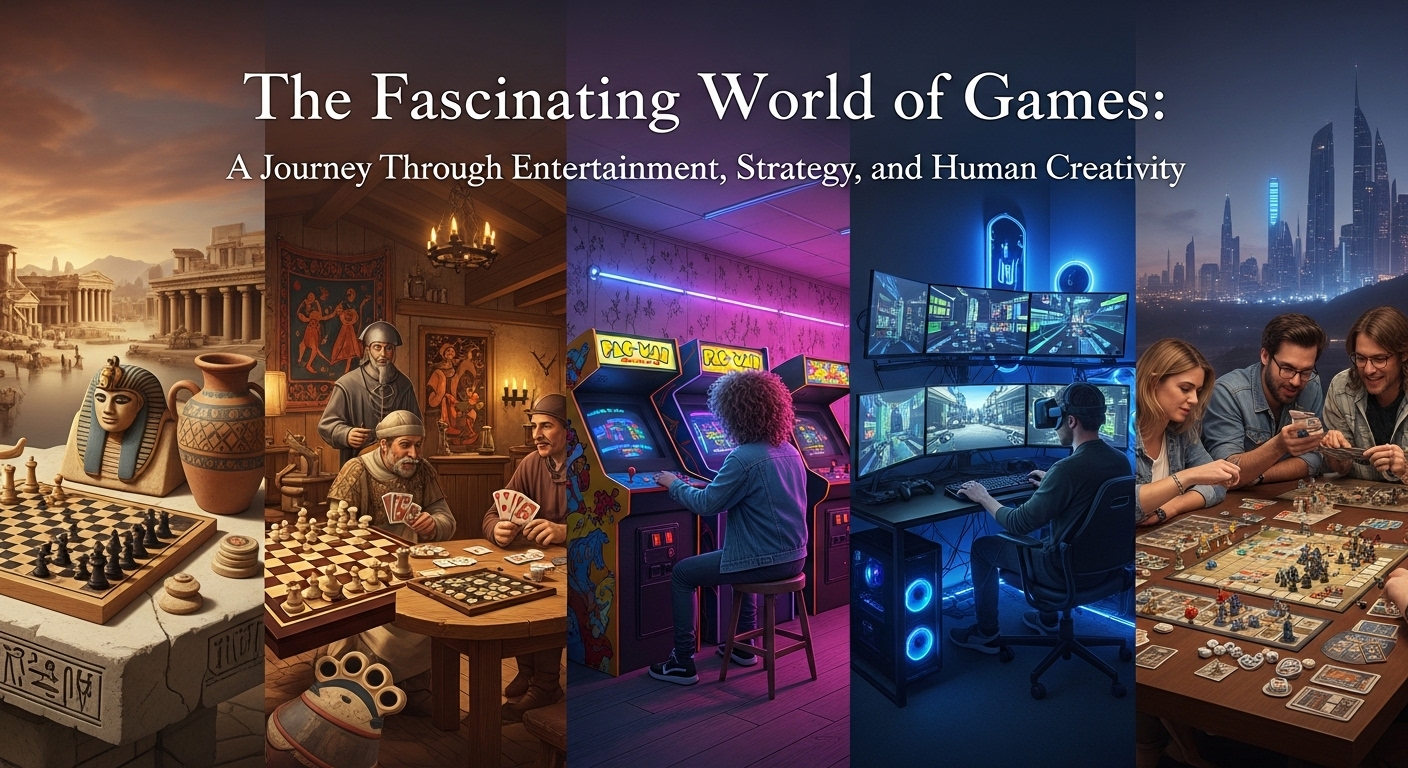
Games have been an integral part of human civilization since ancient times. Whether played for fun, competition, or learning, games have always mirrored human creativity, intelligence, and the desire for social connection. From the earliest board games carved into stone to modern virtual reality simulations, the journey of games reflects how humanity has evolved technologically and socially. The world of gaming is vast, encompassing traditional outdoor games, indoor board games, card games, and now, digital and online games that connect millions across the globe. This blog explores the history, transformation, psychological impact, cultural significance, and future of games, diving deep into how this timeless activity continues to shape human life.
The Origin of Games in Ancient Civilizations
The history of games dates back thousands of years. Archaeologists have discovered ancient gaming boards, dice, and pieces in places like Egypt, Mesopotamia, and the Indus Valley. Games such as Senet in Egypt, believed to be over 5,000 years old, were not merely for recreation but also carried spiritual significance. In Mesopotamia, the Royal Game of Ur represented both entertainment and symbolic journeys through life and death.
In ancient Greece, games were closely associated with physical prowess and intellect. The Olympic Games, which began around 776 BC, celebrated athletic excellence and unity among city-states. Similarly, in China, games like Go and Mahjong emerged as mental challenges, requiring deep strategy and patience. These ancient forms of play reveal that games were more than just leisure—they were tools of social bonding, skill development, and even ritual expression.
The Medieval and Renaissance Period: Strategy and Nobility
As civilizations grew, so did the sophistication of games. The medieval era witnessed the rise of strategic games like chess, which originated in India as chaturanga before spreading across Persia and Europe. Chess became a symbol of intelligence and power, often played by nobility to sharpen their tactical thinking.
In this era, games also reflected class divisions. Nobles enjoyed hunting, jousting, and board games, while peasants engaged in folk games that required minimal equipment, such as running contests or ball games. During the Renaissance, intellectual games flourished as education and art gained importance. Card games like Tarot and playing cards spread through Europe, introducing elements of chance, fate, and fortune-telling.
These centuries laid the foundation for modern gaming by emphasizing both mental and physical skill. Games were not just diversions; they became a means of self-improvement, reflection, and storytelling.
The Industrial Revolution: The Birth of Modern Gaming
The Industrial Revolution in the 18th and 19th centuries brought massive changes to society, and games evolved alongside them. With urbanization and technological advancements, people had more leisure time, and industries began producing standardized board games. One of the first mass-produced games was The Mansion of Happiness in the 1840s, a moral-based board game from America.
By the late 19th century, Monopoly, Scrabble, and Clue were introduced, turning homes into hubs of entertainment. Parlor games and puzzle-solving became popular family activities, fostering social interaction and creativity. At the same time, sports such as soccer, baseball, and cricket became organized with formal rules and competitions.
The rise of mass communication helped spread games globally. Newspapers featured crossword puzzles, while toy companies innovated with new designs. The Industrial Revolution thus democratized games, making them accessible to all classes and cultures.
The Digital Revolution: A New Era of Gaming
The 20th century ushered in the digital age, completely transforming the concept of play. The first computer-based games appeared in the 1950s and 60s, primarily developed by scientists and students experimenting with early computers. Games like Tennis for Two and Spacewar! marked the beginning of electronic entertainment.
The 1970s and 80s saw the birth of the video game industry with arcade machines like Pong and Pac-Man, followed by home consoles such as the Atari 2600 and Nintendo Entertainment System. These games captivated millions and turned gaming into a commercial phenomenon. The 1990s brought 3D graphics and immersive storylines, with titles like Super Mario 64, The Legend of Zelda, and Final Fantasy setting new creative standards.
With the introduction of the internet in the late 1990s, gaming took a massive leap forward. Multiplayer and online games such as World of Warcraft and Counter-Strike connected players worldwide. Gaming was no longer a solitary experience—it became a global community.
The Psychology of Gaming: Why We Play
The human mind finds immense satisfaction in play. Games stimulate cognitive processes such as problem-solving, memory, and decision-making. They provide a sense of achievement, offering structured challenges that reward effort and creativity.
Psychologists have studied why people play games for decades. One popular theory, called Self-Determination Theory, suggests that games fulfill three psychological needs: autonomy (control over one’s actions), competence (the feeling of mastery), and relatedness (connection with others). This explains why both single-player adventures and multiplayer games can be deeply fulfilling.
Moreover, games offer escapism. In a world filled with stress and uncertainty, gaming provides a controlled environment where players can explore, experiment, and experience success. Games also foster resilience—players learn from failure, adapt strategies, and try again, mirroring real-life problem-solving.
Social and Cultural Impact of Games
Games are not isolated activities; they reflect and influence the culture of their times. Traditional games like cricket, chess, or tag often carry deep cultural roots, symbolizing heritage and community identity. Similarly, modern video games act as digital storytelling tools, expressing political, moral, and social themes.
Esports, or competitive gaming, has become a cultural powerhouse. Millions of fans watch tournaments where professional gamers compete for fame and fortune. The rise of platforms that broadcast gaming events has transformed gaming into a spectator sport, much like football or basketball.
Additionally, gaming has bridged generations. Parents who grew up with early consoles now play games with their children, creating shared experiences. Cultural representation in games has also evolved, with developers striving to include diverse characters, stories, and settings that reflect global communities.
The Educational and Developmental Role of Games
Contrary to early criticism, games have proven to be powerful tools for education and skill development. Educational games help children learn mathematics, language, and science through interactive challenges. Simulation games like The Sims or SimCity teach resource management and creativity.
Serious games, used in training and therapy, have transformed how professionals learn. Pilots train using flight simulators, doctors use virtual surgery games to improve precision, and soldiers practice strategies in simulated environments. Even corporate leaders use gamified learning to enhance team collaboration and innovation.
Furthermore, games help develop critical thinking, hand-eye coordination, and social skills. Cooperative gaming encourages teamwork, while competitive gaming sharpens focus and reaction time. The blend of entertainment and learning makes games one of the most effective mediums for human development.
The Business of Gaming: From Hobby to Industry
The gaming industry has grown into one of the most profitable entertainment sectors in the world. What began as small-scale arcade production has evolved into a trillion-dollar industry. Game development now involves complex processes—storywriting, coding, art design, music composition, and marketing.
Major companies dominate the console market, while independent developers create innovative indie games that often challenge mainstream ideas. Mobile gaming has exploded in popularity, allowing people to play anytime, anywhere. Games like puzzle titles, adventure stories, and competitive battle royales have reached audiences across all ages and backgrounds.
The financial success of gaming is not just about sales. In-game purchases, merchandise, streaming, and esports sponsorships generate enormous revenue. The industry also fuels advancements in technology, such as graphics processing, artificial intelligence, and virtual reality.
The Rise of Online Communities and Multiplayer Worlds
Modern gaming thrives on connection. Online multiplayer games create virtual worlds where people collaborate, compete, and socialize. Titles like Minecraft, Fortnite, and Among Us have become social hubs, especially during times when physical gatherings are limited.
Players form friendships, alliances, and even professional relationships through gaming platforms. Guilds, clans, and communities organize events, create fan art, and share strategies, turning games into digital societies. This communal aspect highlights gaming’s power to unite people across geography, language, and culture.
However, online gaming also presents challenges, including toxicity, addiction, and cyberbullying. Developers and communities continue to address these issues through moderation tools, awareness programs, and positive reinforcement.
The Future of Gaming: Technology and Beyond
The future of gaming promises even greater innovation. Virtual reality (VR) and augmented reality (AR) are already transforming how players experience worlds, allowing full immersion in 3D environments. Artificial intelligence is enhancing realism by creating smarter, more responsive game worlds.
Cloud gaming eliminates the need for powerful consoles or PCs, enabling streaming games directly to any device. Blockchain technology and digital ownership models are reshaping how players interact with virtual economies, though ethical debates continue.
Another exciting frontier is the integration of gaming with real-life experiences. Fitness games, interactive learning systems, and mixed reality entertainment blur the line between play and daily life. As technology progresses, games may become as integral to living as reading or communicating.
The Cultural Power of Play
Games have always been more than entertainment—they are reflections of humanity’s creativity and social evolution. They teach, connect, challenge, and inspire. From ancient stones carved into game boards to sophisticated digital worlds that stretch imagination, the essence of gaming remains the same: the joy of discovery and the thrill of competition.
In every era, games have mirrored human aspirations. They have fostered friendship, encouraged innovation, and even influenced art, science, and education. The language of play transcends borders, generations, and beliefs. It is a universal form of expression that continues to evolve with humanity itself.
The world of gaming is not just about pixels and controllers. It is about the stories we tell, the challenges we overcome, and the communities we build. As technology and imagination advance, one thing remains certain—the spirit of play will never fade. Games will continue to evolve, just as they always have, reflecting who we are and who we strive to become.
Conclusion
Games are a living part of human culture—ancient in origin, modern in expression, and timeless in impact. They shape minds, connect hearts, and push technological frontiers. Whether it is a child learning through a puzzle, a professional gamer competing on a global stage, or friends bonding over a shared adventure, games remain a powerful force in our lives. As the future unfolds, the role of gaming will only grow, influencing not just how we play, but how we think, learn, and dream.