 By gamerforge57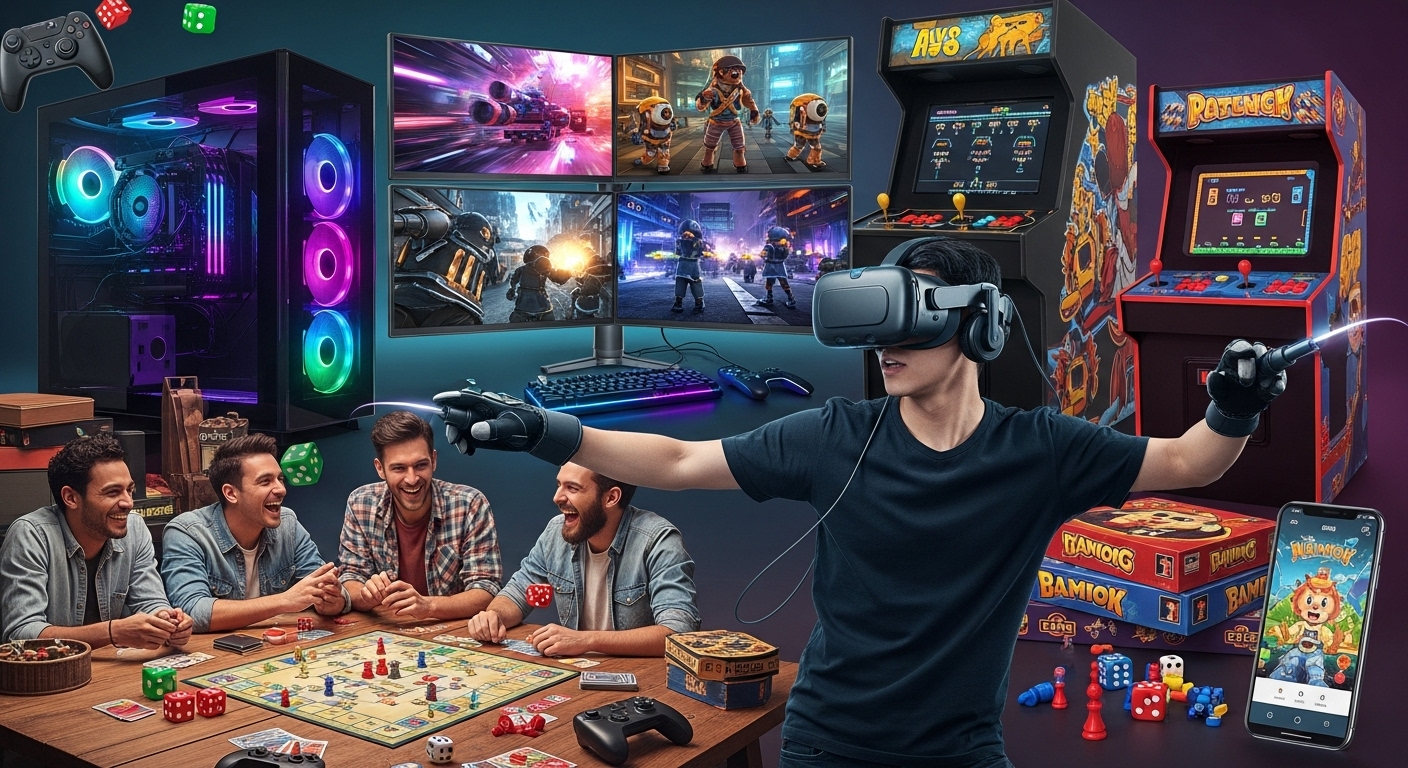
Introduction
Games have always been an essential part of human culture, serving as a source of entertainment, education, and creativity. From the earliest forms of play carved into ancient stones to today’s immersive digital experiences, games have continuously evolved alongside humanity. They reflect our imagination, intelligence, and need for connection. In the twenty-first century, games have become one of the most influential industries in the world, impacting how we think, learn, and interact. This blog explores the journey of games, their influence on society, the rise of gaming culture, and what the future holds for this dynamic form of art and technology.
The Origins of Games
Long before computers and consoles, games existed as a form of social and mental engagement. Ancient civilizations like Egypt, China, and Mesopotamia had their own traditional games that reflected cultural values and intellect. The Egyptian game of Senet, one of the oldest known board games, represented a journey through the afterlife. In ancient China, Go was played to strengthen strategic thinking and patience. These early games required not just luck but skill, decision-making, and critical thought, proving that even in ancient times, games were more than just simple amusement—they were tools of learning and reflection.
The Evolution of Board and Physical Games
Board games continued to evolve through the centuries. Chess, invented in India around the 6th century, became a universal symbol of strategy and intelligence. Dice-based games introduced probability and risk-taking into play. As societies progressed, card games and tabletop experiences brought families and friends together. Games like Monopoly, Scrabble, and Ludo became household staples that encouraged creativity, learning, and competition. These traditional games helped shape human interaction, teaching important life skills like patience, cooperation, and decision-making.
The Digital Dawn of Gaming
The birth of digital technology in the 20th century revolutionized the concept of gaming. What started with simple experiments like “Tennis for Two” in 1958 and “Spacewar!” in 1962 evolved into a cultural phenomenon. The 1970s and 1980s marked the rise of video arcades, where games like Pac-Man, Donkey Kong, and Space Invaders captured the imagination of millions. These games may appear simple today, but at the time, they represented groundbreaking innovation. They introduced the idea of interactive entertainment, where players could influence outcomes rather than simply observe them.
The Home Console Revolution
The development of home consoles transformed gaming from a public activity to a personal experience. With systems like the Atari 2600, Nintendo Entertainment System, and Sega Genesis, families could enjoy gaming in their living rooms. This period also gave birth to iconic characters like Mario, Sonic, and Link—heroes who remain beloved to this day. These consoles brought gaming to the masses, creating a shared global culture. Developers began focusing not just on mechanics but on stories, worlds, and emotions, turning games into a legitimate art form.
The Rise of 3D Gaming and Realism
The 1990s introduced a dramatic shift from two-dimensional gameplay to immersive three-dimensional experiences. Games like Super Mario 64, Tomb Raider, and The Legend of Zelda: Ocarina of Time opened up vast new possibilities. Players could now explore open worlds, interact with environments, and engage in cinematic adventures. Graphics, sound, and storytelling became more sophisticated. Gaming evolved into a medium capable of expressing complex ideas and emotions. The introduction of 3D technology was not merely a visual improvement; it redefined how players connected with the game world.
The Internet and Online Connectivity
The rise of the internet in the late 1990s and early 2000s took gaming beyond individual play. Multiplayer experiences became the norm, allowing players from around the world to compete and collaborate in real time. Games like Counter-Strike, World of Warcraft, and The Sims Online built virtual communities where people could communicate, share experiences, and build friendships. Online gaming also gave rise to a new form of digital culture, where virtual worlds became extensions of real-life social spaces. This shift from isolated play to global connection redefined what it meant to be a gamer.
Mobile Gaming and Accessibility for All
The launch of smartphones marked another major turning point in gaming history. Mobile games brought entertainment to everyone, anywhere, at any time. Titles like Angry Birds, Temple Run, and Candy Crush turned casual gaming into a global trend. Mobile games are not limited to any age group—they appeal to both children and adults. The simplicity of mobile controls and the convenience of access helped gaming reach audiences who had never played before. This democratization of gaming proved that play is universal and that technology can make it more inclusive than ever.
Esports and Competitive Gaming
In recent years, gaming has evolved into a professional competitive industry known as esports. What was once a hobby has become a global sporting event, with professional players, teams, and millions of fans. Tournaments for games like League of Legends, Dota 2, and Fortnite attract enormous crowds and offer multimillion-dollar prizes. Esports has brought legitimacy and respect to gaming, showcasing skill, strategy, and teamwork on par with traditional sports. Schools and universities now offer scholarships for gaming, and esports careers have become viable professions. This transformation has redefined how society views games—not just as entertainment but as a field of expertise and opportunity.
The Power of Storytelling in Games
One of the most powerful aspects of modern gaming is storytelling. Games are no longer limited to simple goals or high scores. They tell emotional, thought-provoking stories that resonate with players. Titles like The Last of Us, Red Dead Redemption 2, and Life is Strange demonstrate how games can rival films and novels in emotional depth and narrative complexity. Players become part of the story, making choices that affect outcomes. This level of interactivity gives storytelling a unique power—games allow us not just to witness a journey but to live it.
The Role of Technology in Enhancing Gaming
Technological advancements have pushed the boundaries of gaming further than ever before. High-definition graphics, virtual reality, and artificial intelligence have turned games into lifelike experiences. Virtual reality allows players to step inside digital worlds, while AI-driven characters make gameplay more dynamic and responsive. Real-time rendering and motion capture technology have made visuals incredibly realistic. Sound design and haptic feedback add to the immersion, engaging all senses. Technology has transformed gaming into a form of art that combines science, creativity, and storytelling.
The Impact of Indie Games
While large studios dominate the industry, independent developers have brought creativity and diversity to gaming. Indie games often explore unconventional ideas and art styles that mainstream titles might avoid. Games like Celeste, Undertale, and Hollow Knight have proven that innovation does not depend on massive budgets. These smaller projects often focus on emotional storytelling, artistic expression, and unique gameplay mechanics. Indie developers remind us that games can be personal, meaningful, and experimental while still being fun and engaging.
The Educational and Cognitive Benefits of Games
Beyond entertainment, games offer significant educational and mental benefits. Strategy games improve problem-solving and decision-making skills. Puzzle games enhance memory and logical thinking. Simulation games teach real-world concepts like management, architecture, and survival. Educational institutions now use gaming as a teaching tool to make learning interactive and engaging. Moreover, games can foster creativity, teamwork, and resilience. For many, gaming also provides a form of stress relief and emotional balance. When used responsibly, games can be powerful instruments of personal growth.
The Cultural Influence of Games
Gaming has become an integral part of modern culture. It influences music, fashion, movies, and art. Characters from games appear in films, and game-inspired soundtracks are performed by orchestras worldwide. The culture surrounding gaming has created communities where players share experiences through fan art, online forums, and conventions. Streaming platforms have turned gaming into a social performance where players entertain millions of viewers. Gaming has also helped break cultural barriers, connecting people across languages and backgrounds through shared experiences.
Challenges in the Gaming World
Despite its achievements, the gaming industry faces several challenges. Issues like online toxicity, addiction, and unfair monetization practices have sparked global discussions. Developers also struggle with representation and inclusivity, striving to ensure that games reflect diverse perspectives and identities. Moreover, the intense competition and pressure in game development often lead to burnout among creators. The industry must continue to balance creativity, ethics, and well-being to sustain long-term growth and maintain a positive impact on society.
The Future of Games
The future of gaming looks more exciting than ever. Cloud technology is making high-quality games accessible without the need for expensive hardware. Artificial intelligence will enhance both storytelling and player interaction. Virtual and augmented reality will continue to merge real and digital worlds, making play even more immersive. The concept of the metaverse—a vast interconnected digital universe—may redefine how people socialize, work, and play. Games will not only entertain but also educate, inspire, and connect people in ways that were once unimaginable.
Conclusion
From ancient board games to virtual realities, the journey of gaming reflects human creativity and progress. Games have evolved from simple diversions to complex art forms that teach, inspire, and unite people across the world. They challenge the mind, spark imagination, and offer new ways of experiencing stories and emotions. Whether it is a child learning through play or a professional competing on the world stage, games continue to shape how we think and live. The power of play lies in its universality—it reminds us that imagination has no limits, and in every game, there is a story waiting to be lived.